Celeste: The Dash
The dash in Celeste is one of the most celebrated Gestures in modern platforming. It's simple - press a button, move in a direction - and perfect. Understanding why it's perfect teaches us what Gesture design can achieve.
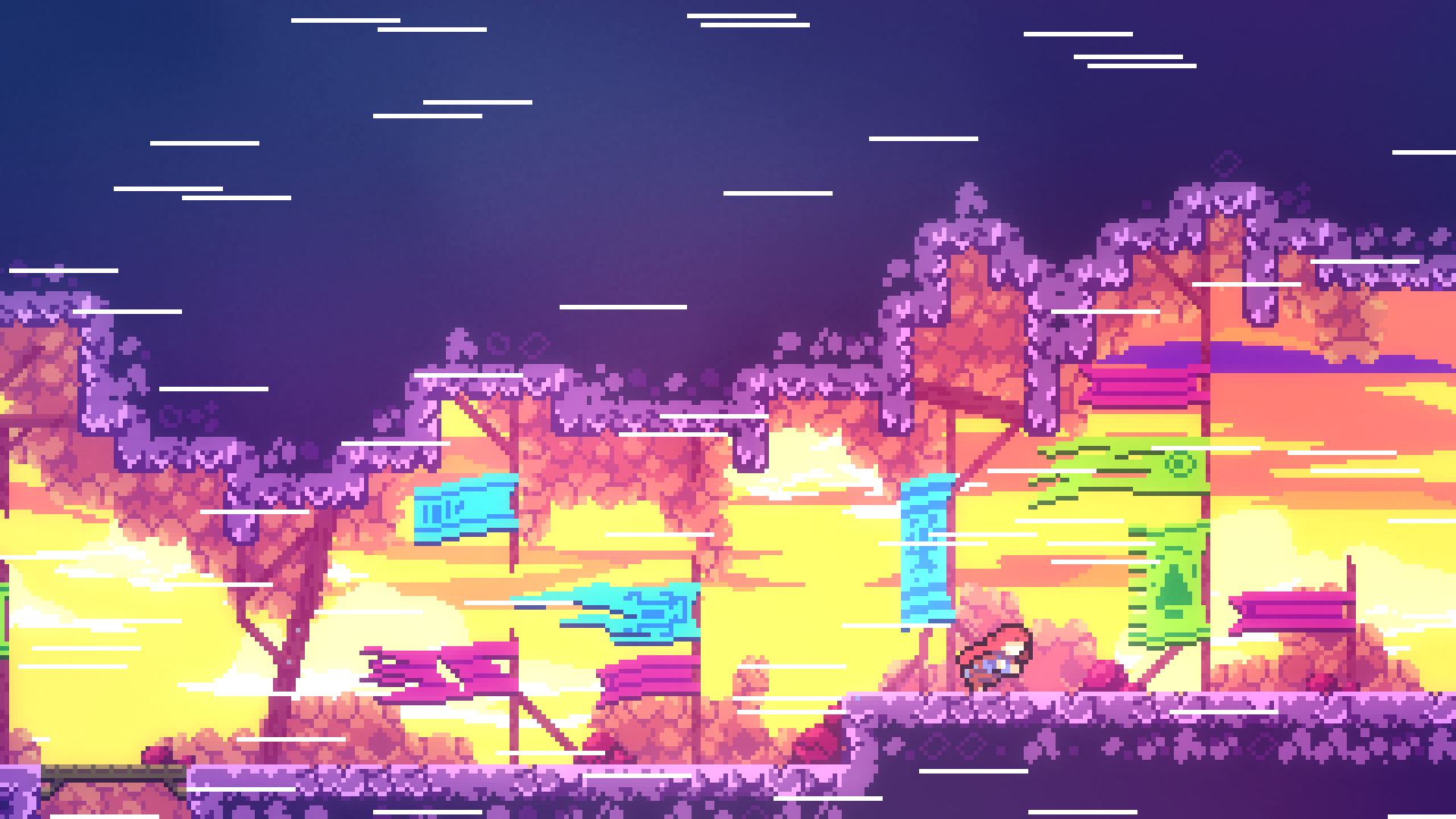
The Gesture
Input: Press dash button + direction
Action: Burst of movement in 8 directions (including diagonals), briefly invulnerable
Duration: ~0.15 seconds of dash, brief recovery
Limitation: One dash per airborne period, refreshes on ground/wall/certain objects
What Makes It Perfect
Clarity
You always know if you have your dash. Visual indicator, audio cue, and kinesthetic memory all align. No ambiguity.
Expressiveness
Eight directions means player choice. The dash isn't a fixed escape - it's a tool you aim. Skill expression happens in the aiming.
Commitment
Once you dash, you're committed. No canceling mid-dash. This creates the tension: you have to be right.
Resource Management
One dash per air time. You're always asking: "Do I spend it now?" This transforms platforming into resource decisions.
Feel
The combination of:
- Instant start (no wind-up)
- Consistent duration
- Clear end state
- Visual trail
- Sound design
- Screen effects
All elements reinforce: this is a burst, a thrust, a commitment.
The 4 A's of the Dash
Analyzing through the 4 A's:
- Action: Directional burst, committed, one-per-air. The player chooses direction and timing.
- Art: Sprite blur, hair color change, particle trail, whoosh sound. Every sensory channel confirms the dash.
- Arc: ~0.15 seconds - a micro-moment. But that micro-moment punctuates longer arcs of traversal.
- Atmosphere: Urgency, precision, the feeling of barely-making-it. The dash feels athletic.
Feedback Design
The dash is a feedback symphony:
| Channel | Element |
|---|---|
| Visual | Sprite blur, hair color change, particle trail |
| Audio | Distinct dash sound (whoosh + impact) |
| Animation | Squash/stretch, body angle |
| Screen | Brief shake, possible freeze frame on direction change |
| UI | Dash indicator (hair color shows availability) |
Every channel confirms: you dashed. The layering creates certainty without being overwhelming.
The Dash and Difficulty
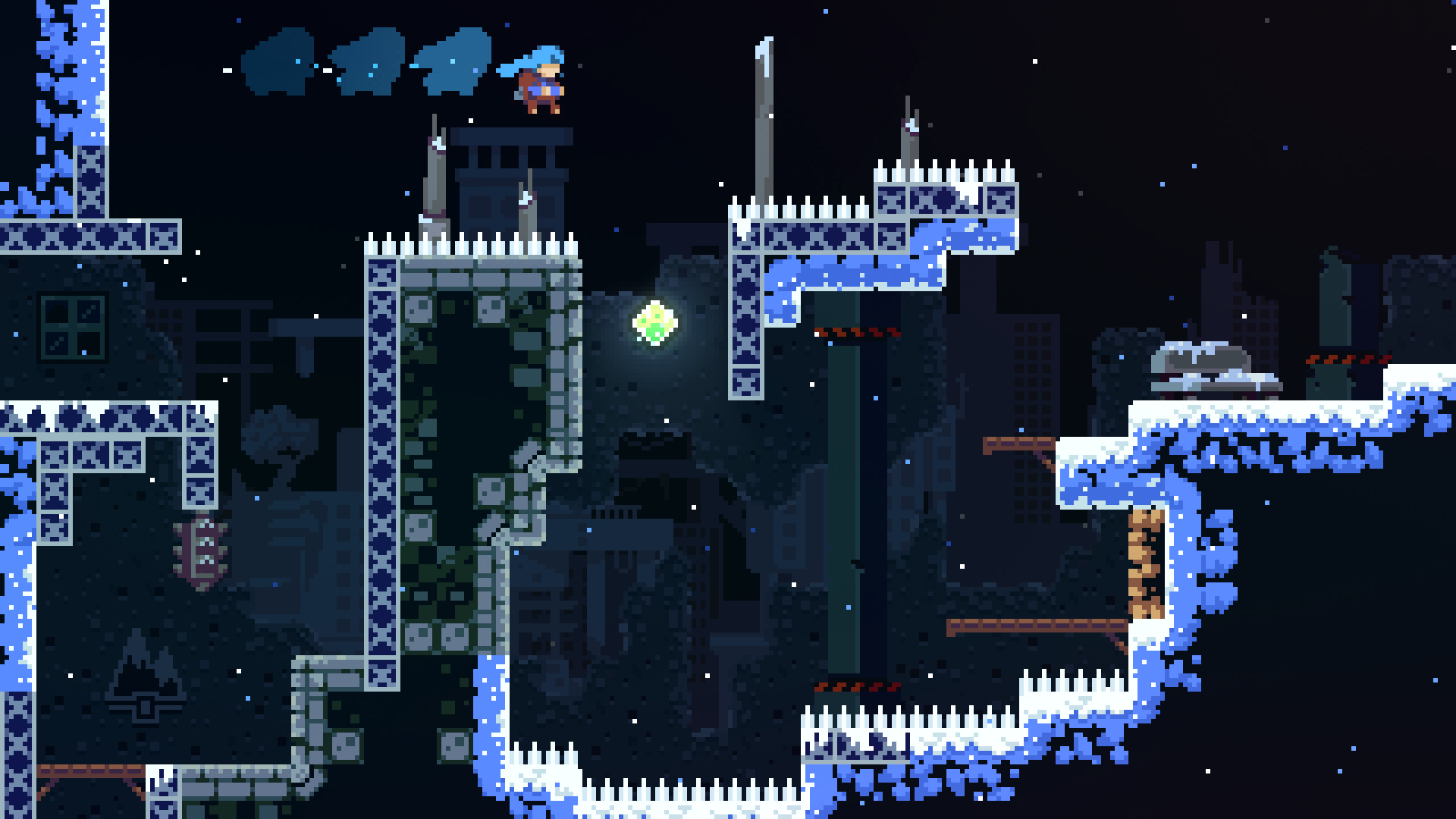
Celeste is hard. The dash is why it can be hard without being frustrating.
Because the dash is:
- Reliable - same every time
- Readable - you know what happened
- Fair - you had the tool; you used it wrong
Death feels earned. "I should have dashed left." Not: "the videogame cheated me."
Try This
Recreate the Dash
Using the Code Bank Dash scaffold, recreate the Celeste dash feel. What variables matter most?
Remove One Element
Take a working dash. Remove the sound. Or the trail. Or the recovery. What changes?
One Dash vs. Infinite
Play a level with one dash. Then with infinite. How does the experience change? What do you lose?
Why Use This Case Study
The Celeste dash is ideal for teaching Gesture because:
- It's short enough to analyze frame-by-frame
- Students can feel the difference when elements are removed
- The videogame has Assist Mode, allowing direct experimentation
- Matt Thorson has discussed the design publicly
Teaching Sequence
- Play Celeste Chapter 1 together (15-20 min)
- Identify the dash as a Gesture
- Break down the 4 A's
- Discuss: Why does this feel good?
- Use Assist Mode to add infinite dashes - how does experience change?
- Connect to constraint and decision-making
Discussion Prompts
- What would happen if the dash had a wind-up (delay before activation)?
- What if you could cancel the dash mid-movement?
- How does the one-dash limit create "questions" for the player?
- Compare to dashes in other videogames. What's different?
Common Misconceptions
"The dash is just fast movement"
The dash isn't speed - it's commitment and resource. The speed matters less than the decision to use it.
"More feedback is always better"
Celeste's feedback is layered but restrained. Too much would overwhelm. Each element serves a purpose - clarity, not spectacle.
Exercise: Feedback Audit
Have students audit the feedback channels in a Gesture from a videogame they're making:
- List every feedback element (visual, audio, haptic, etc.)
- For each, ask: What information does this convey?
- Identify gaps: What's unclear? What's redundant?
- Prototype one improvement
Aesthetic Heritage
The dash inherits from:
Mega Man X's dash - The ground dash that changed platformers. Celeste extends it into air.
Air-dash fighting videogames - Aerial mobility as skill expression. The eight directions echo fighting videogame motion.
Super Meat Boy's run - Tight, committed movement. Celeste adds the dash as discrete resource.
But Celeste transforms the inheritance:
- Dash is limited (once per air), creating decision
- Dash is directional (8-way), creating expression
- Dash is tied to narrative (Madeline's abilities reflect her emotional state)
The Dash and Accessibility
Celeste's Assist Mode lets you:
- Add extra dashes (infinite if desired)
- Slow videogame speed
- Grant invincibility
This doesn't "break" the dash. It changes the Permission structure. The dash is still the dash. Players who need it get more of it.
The dash design is robust enough to survive different permission settings. That's good Gesture design.
What Celeste Teaches
- Gestures are designed wholes. Input, action, feedback, consequence - all aligned.
- Constraint creates meaning. One dash = decisions. Infinite dash = no decisions.
- Heritage can be transformed. Take the Mega Man dash, add limitation, add verticality, add narrative. New Gesture.
- Feel is layered feedback. The dash "feel" is a dozen elements working together.
- Good design survives accessibility. If your Gesture breaks when made easier, it was fragile.
Unresolved Questions
- How much of the dash's success comes from the level design built around it?
- Is the dash's "perfection" a matter of tuning, or fundamental design choices?
- Could the dash work in 3D, or is it inherently a 2D Gesture?
References
- Swink, Steve. Game Feel (2009) - foundational text on game feel
- Anthropy, Anna & Clark, Naomi. A Game Design Vocabulary (2014) - on verbs and actions
- Matt Thorson's GDC talks on Celeste and TowerFall design
Related
- Gesture - the dash as canonical Gesture
- Aesthetic Heritage - where the dash comes from
- The 4 A's - analyzing the dash's components
- Celeste: Assist Mode - accessibility implications
- Code Bank: Dash - scaffold for dash implementation