Verticality & Sight Lines
Verticality is the use of height - how videogames exploit the up-down axis for gameplay, navigation, and meaning.
Sight lines are what you can see from where you are - how visibility is controlled to guide attention, create anticipation, and manage information.
Together, they're fundamental to 3D level design.
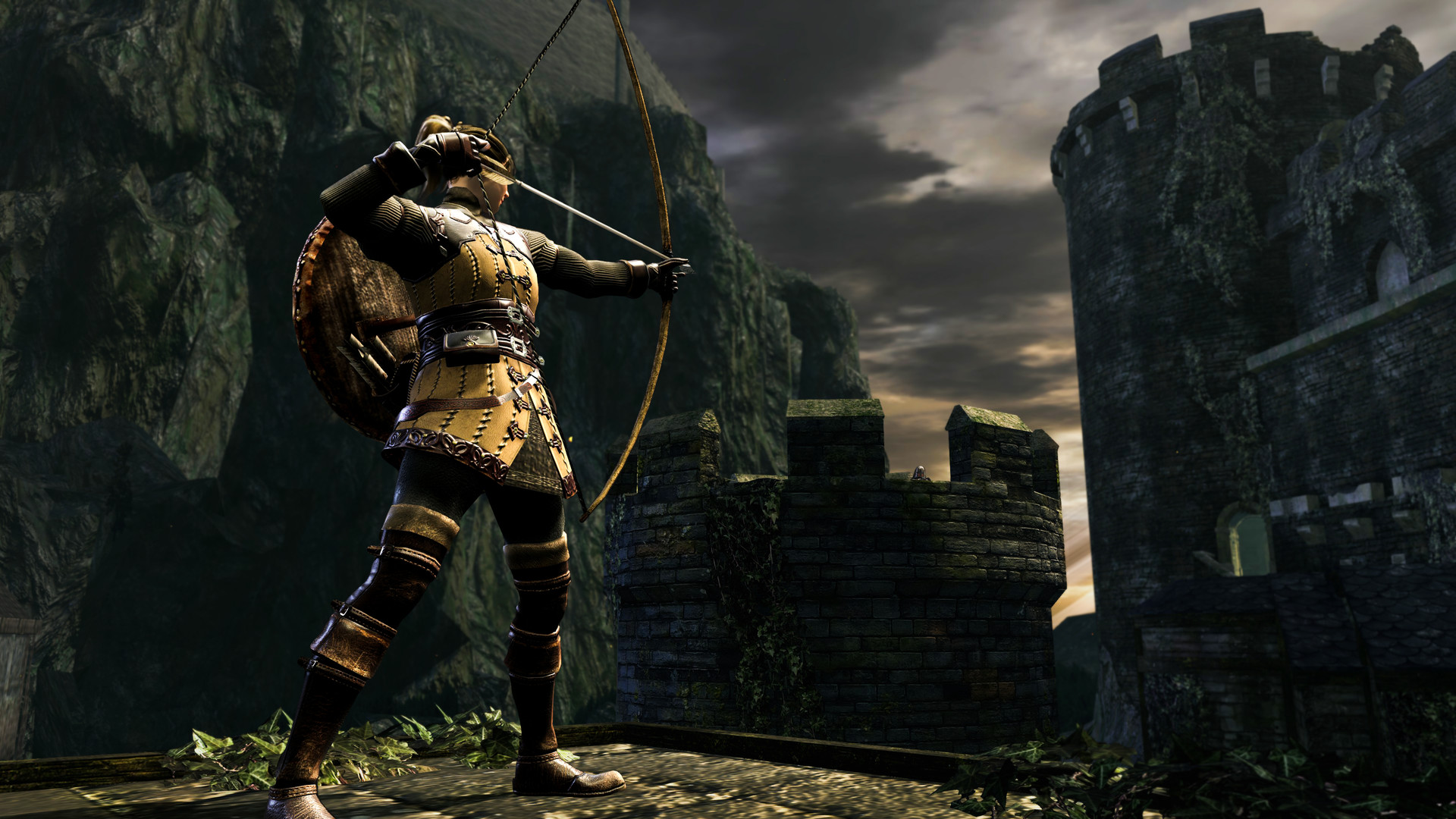
Why Verticality Matters
The vertical axis does things the horizontal can't:
Power Dynamics
High ground = advantage in most videogames. Looking down on enemies vs. looking up at threats creates different feelings.
Discovery
Climbing to see more. The vista from the peak. Dropping into the unknown.
Navigation
"I need to get up there" is clearer than "I need to get over there somewhere."
Variety
Horizontal-only spaces get monotonous. Verticality creates interest.
Types of Verticality
| Type | Player experience | Example |
|---|---|---|
| Ascent | Climbing, progress, revelation | Hiking up in Celeste, tower climbs |
| Descent | Delving, danger, commitment | Dark Souls descent to Blighttown |
| Layered | Multiple levels to navigate | Dishonored's multi-story buildings |
| Hub | Central vertical space connecting areas | Metroid Prime's vertical shafts |
| Arena | Combat space with height variation | Halo's multi-level arenas |
Designing Verticality
Establish the Vertical Goal
Show players where they need to go vertically. A tower in the distance. A light above. A pit below.
Make Height Readable
Distinct visual treatment for different elevations. Players should know what level they're on.
Provide Landmarks
In vertical spaces, horizontal landmarks aren't enough. Distinctive elements at different heights.
Consider Camera
Some camera angles handle verticality poorly. Top-down struggles with layered spaces. First-person handles it naturally.
Design for Movement
How does the player traverse vertically? Jumping? Climbing? Elevators? Flight? The traversal mechanics shape what verticality means.
Sight Lines
Sight lines are what the player can see from any given position.
Control of sight lines = control of information = control of experience.
Long Sight Lines
You can see far. Creates:
- Anticipation (I can see what's coming)
- Goals (I can see where I'm going)
- Vulnerability (enemies can see me too)
- Scale (the world feels big)
Blocked Sight Lines
You can't see around the corner. Creates:
- Mystery (what's there?)
- Tension (threat could be anywhere)
- Surprise (reveal around the bend)
- Intimacy (the world feels close)
Controlled Reveals
The sight line opens at a specific moment. Creates:
- Vista moments (you emerge and see the landscape)
- Dramatic reveals (the boss appears)
- Teaching moments (you see the solution before you can reach it)
Sight Line Techniques
The Weenie
Disney Imagineering term: a tall, visible landmark that draws you forward. Breath of the Wild's towers. The Citadel in Half-Life 2.
The Denied View
You can almost see something, but not quite. A window that shows only a glimpse. Creates desire.
The Frame
Architecture that frames a view. A doorway, a window, an arch. Focuses attention on what's framed.
The Turn
Corners and bends that block sight. Every corner is a potential reveal.
The Overlook
A position where you can see an area you'll later traverse. Creates anticipation and aids navigation.
Verticality + Sight Lines
The most powerful level design combines them:
- Climb to overlook: Ascend to gain information about the space below
- Descend into unknown: Sight lines blocked as you go deeper
- Spotted from above: High enemies see you before you see them
- The vista moment: Emerging from a confined space to see the vertical world spread before you
Dark Souls' Firelink Shrine is a masterclass: you can see places you'll visit dozens of hours later. The sight lines create the world before you traverse it.
See Also
- Spatial Communication - how space communicates
- Pacing & Flow - verticality affects pacing
- Environmental Storytelling - sight lines as narrative control
Glossary Connections
- Weenie - visible landmark drawing player forward
- Vista - dramatic revealing view
- Sight Line - what's visible from a position
Teaching Notes
Verticality is often undertaught. Students default to flat level design because it's easier. Push them into 3D thinking.
Exercise: Vertical Diagram
Design a level on paper using ONLY a side-view cross-section. No top-down allowed. How does this change what you think about?
Exercise: Sight Line Control
In a 3D engine, build a simple space. Then modify it to:
- Maximize sight lines (player can see everything)
- Minimize sight lines (player can see almost nothing)
- Control one specific reveal moment
What does each feel like to traverse?
Key Insight
Sight lines are information design. What the player knows and when they know it is determined by what they can see.
Common Misconceptions
- "More vertical = more complex = better." Some videogames benefit from flatness. 2D videogames have their own vocabulary. Verticality is a tool, not a goal.
- "Players will always climb." Without clear motivation, players may ignore vertical paths. The goal needs to be visible or implied.
- "Long sight lines are always good." Mystery requires blocked sight lines. Horror requires limited visibility. Match the sight line strategy to the experience.
Assessment Approaches
- Cross-section analysis: Have students draw side-view cross-sections of their levels. Does interesting vertical design emerge?
- Sight line audit: Screenshot every major viewpoint in a level. What can the player see? What is hidden? Is it intentional?
- Vertical navigation test: Time how long it takes players to find vertical paths. If they struggle, the visual communication has failed.
Theoretical Background
Disney Imagineering
The "weenie" concept. Theme park design as precedent for videogame level design. Visible landmarks that draw visitors forward through space.
Architecture Theory
Spatial sequence, procession, the journey through a building. Videogames inherit this vocabulary. How we move through space is designed.
Film
Cinematography controls sight lines; level design gives control to the player (or pretends to). The tension between authored sight lines and player-controlled cameras.
What This Framework Takes
The information-control lens. Sight lines aren't just aesthetics - they're how you manage what the player knows.
What This Framework Resists
The "more vertical = more complex = better" fallacy. Some videogames benefit from flatness. 2D videogames have their own vocabulary. Verticality is a tool, not a goal.
Unresolved Questions
- Accessibility: How do accessibility needs affect verticality? Traversal challenges can exclude players. Are there ways to make vertical spaces accessible without removing the verticality?
- VR: VR changes everything about sight lines (you can look anywhere). How does VR level design differ from traditional 3D? What new principles emerge?
- 2D vs. 3D: How do these concepts translate to 2D spaces? What's the vocabulary of sight lines in side-scrollers or top-down videogames?
References
- Imagineering Field Guide (various editions) - Disney's approach to spatial design
- Totten, Christopher. An Architectural Approach to Level Design (2014)
- Valve Developer Commentary (Half-Life 2, Portal series)
- Brown, Mark. "The World Design of Dark Souls" (Game Maker's Toolkit, 2016)