Ludonarrative Harmony
When what you do (ludo) and what you're told (narrative) reinforce each other. The mechanics and the story say the same thing.
Harmony vs. Dissonance
Ludonarrative harmony is when mechanics and narrative point the same direction. What you do is what the story is about.
Ludonarrative dissonance is when they contradict: the story says one thing, the gameplay says another.
The Classic Dissonance
Uncharted's Nathan Drake is a likable everyman in cutscenes. In gameplay, he kills hundreds of people without hesitation or consequence.
The story says: charming adventurer.
The gameplay says: mass murderer.
This contradiction is ludonarrative dissonance. The two channels of meaning are out of sync.
Harmony in Practice
| Videogame | How mechanics reinforce narrative |
|---|---|
| Journey | Cooperation mechanics support theme of connection |
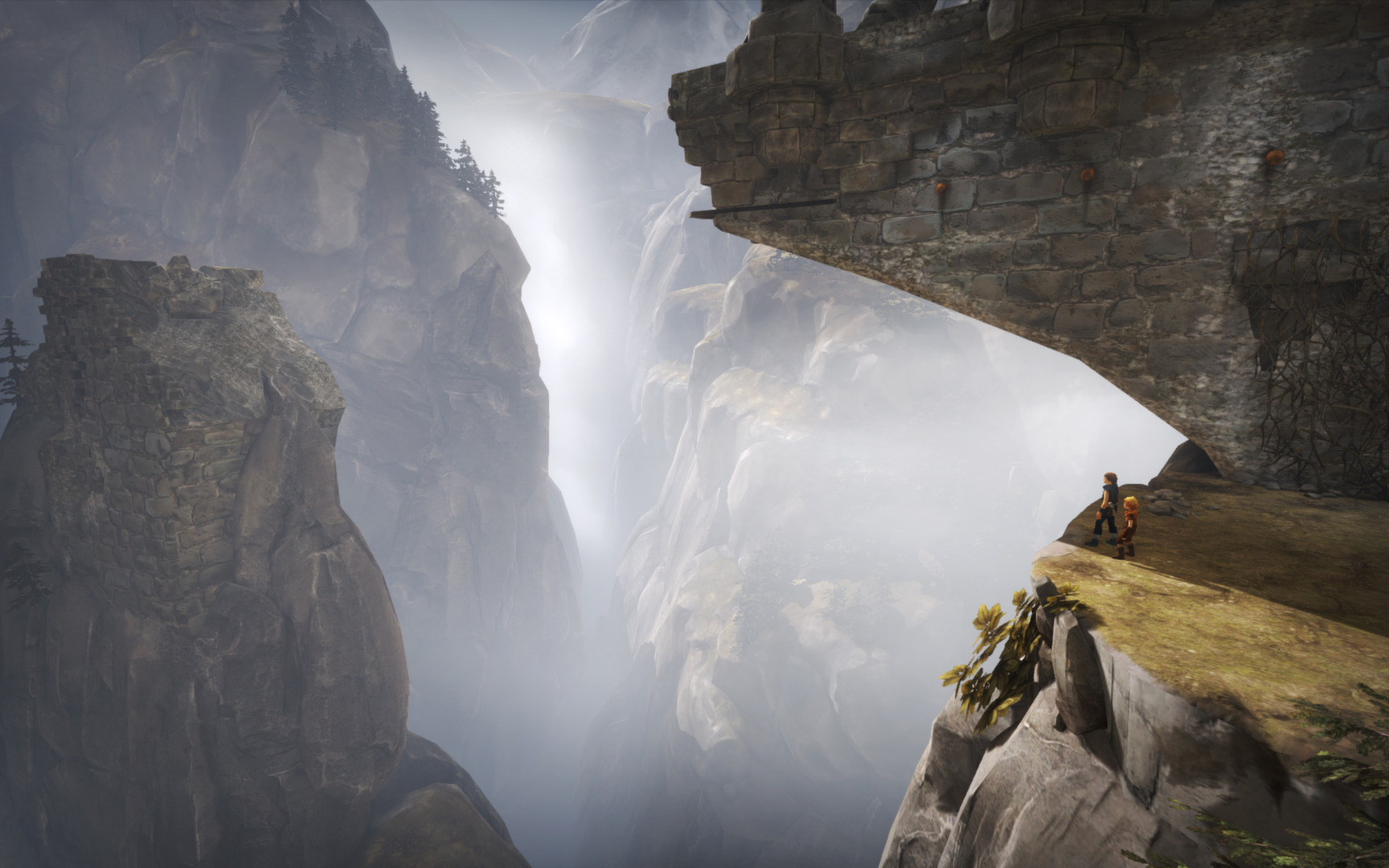
| Brothers: A Tale of Two Sons | Control scheme embodies the relationship |
| Papers, Please | Bureaucratic mechanics create complicity |
| Celeste | Difficulty mechanics mirror struggle with mental health |
| Shadow of the Colossus | Mounting and stabbing creates ambivalence about killing |
In each case, the feeling of playing matches the meaning of the story.
Three Relationships
Harmony: Mechanics and narrative point the same direction. Journey: You walk toward a mountain. You meet strangers. You help each other. The mechanics ARE the theme.
Dissonance: Mechanics and narrative contradict. BioShock: "A man chooses, a slave obeys" - but you have no choice but to follow the objective markers.
Productive Tension: The contradiction is the point. Spec Ops: The Line: You play a shooter, but the videogame wants you to feel sick about shooting. The dissonance indicts the genre.
Achieving Harmony
Start with verbs: What will the player do most? That's what your videogame is about, regardless of your narrative intentions. Design story to match.
Audit your mechanics: For each mechanic, ask: what does this say? A regenerating health system says "damage is temporary." A permanent death system says "death is final." Do those statements match your story?
Use mechanics for theme: Don't just tell a story about loss - make the player lose something. Don't just tell a story about connection - make the player depend on someone.
Accept constraints: If your videogame is a shooter, it's about shooting. You can critique shooting (Spec Ops), but you can't pretend you're not making a videogame about shooting.
Exercise: Dissonance Hunt
Play a videogame and identify every instance of ludonarrative dissonance you can find. Then classify each: accidental, harmful, or productive?
Why Teach This
The core provocation: "Your mechanics are your story. If they contradict your cutscenes, your mechanics win."
Students often want to add narrative to justify mechanics they've already designed. This concept pushes them to ask whether the mechanics should be what they are.
Common Misconceptions
"All dissonance is bad"
Dissonance is only a problem when it's accidental - when the designer didn't notice the contradiction. (Well, a problem for the videogame designer's artistic intent; for players it's just a new gesture!) Dissonance can be a very meaningful and persuasive tool when it's intentional - it doesn't even have to be a contradiction that makes you uncomfortable to be dissonance, though that is always cool.
The biggest example always gone to is BioShock (from Clint Hocking's 2007 blog post that coined the term as a derogatory). The narrative plot is about free will and control, but the videogame is fairly rigid about things in the end.
Another famous example is Uncharted. When applying the idea of ludonarrative dissonance, dashing Nathan Drake is a qualified genocidal force of nature - a player will murder (in self-defense?) 585 to 1,130 people (depending on play style) in his first outing, Uncharted: Drake's Fortune.
It can also be the gap between cutscene and play scene. Halo had a player experience design theory of BYOG (Bring Your Own Gun) - whatever gun you had equipped in play, Bungie wanted it to be in the cutscenes. They wanted you to experience "choices matter" in a very different context than we usually experience.
"Perfect harmony is always the goal"
Tension, contradiction, and discomfort are valid artistic choices. Mario rescues Peach through murdering ~143 Goombas in Super Mario Bros.; no one has ever cared. Context matters.
The "Fun" Problem
Sometimes mechanics are fun but thematically wrong. Uncharted's shooting is satisfying - that's the problem. If it weren't fun, the dissonance wouldn't exist.
Approaches:
- Lean into fun: Accept that your videogame is partly power fantasy. Don't pretend otherwise in cutscenes.
- Make the theme fun: Design mechanics where the thematic action IS the satisfying one. Portal's puzzle-solving is both fun and thematically coherent.
- Make fun uncomfortable: Design mechanics that are satisfying and then make you feel bad about that satisfaction (Spec Ops, Undertale).
- Reduce fun dissonance: If violence is thematically weighty, make combat difficult, costly, or rare.
Assessment
Exercise: Harmony Redesign
Take a videogame with clear dissonance. Redesign EITHER the narrative to match the mechanics OR the mechanics to match the narrative. What's lost in each direction?
Origin of the Term
"Ludonarrative dissonance" was coined by Clint Hocking in a 2007 blog post about BioShock. It became one of the most-used (and sometimes overused) terms in videogame criticism.
Hocking's original critique remains sharp: BioShock asks you to question blind obedience while the gameplay requires blind obedience to objective markers.
Key Influences
Clint Hocking - The original formulation.
Ian Bogost - Procedural rhetoric provides the theoretical backing: videogames make arguments through mechanics.
What We're Taking
The core insight that mechanics mean something, and that meaning should be in dialogue with explicit narrative. This is basic but often ignored.
What We're Resisting
Dissonance policing: The idea that all dissonance is bad. Sometimes it's fine. Context matters more than consistency.
The harmony fetish: The idea that perfect harmony is always the goal. Tension, contradiction, and discomfort are valid artistic choices.
Unresolved Questions
- How much dissonance can players tolerate before it breaks immersion?
- Is dissonance a Western critical concern? Do players from different traditions parse the ludo/narrative relationship differently?
- Can systemic videogames (Dwarf Fortress, Rimworld) have ludonarrative dissonance if they have no authored narrative?
Related
- Gesture - the whole experience, including this tension
- Permissions - what you're allowed to do shapes what the story can be
- Branching & Consequence - when choices create meaning
Glossary Terms
- Ludonarrative Dissonance - when mechanics and story contradict
- Procedural Rhetoric - arguments made through rules