What Makes a Videogame
Videogames are a medium of action. They are played, not just watched or read.
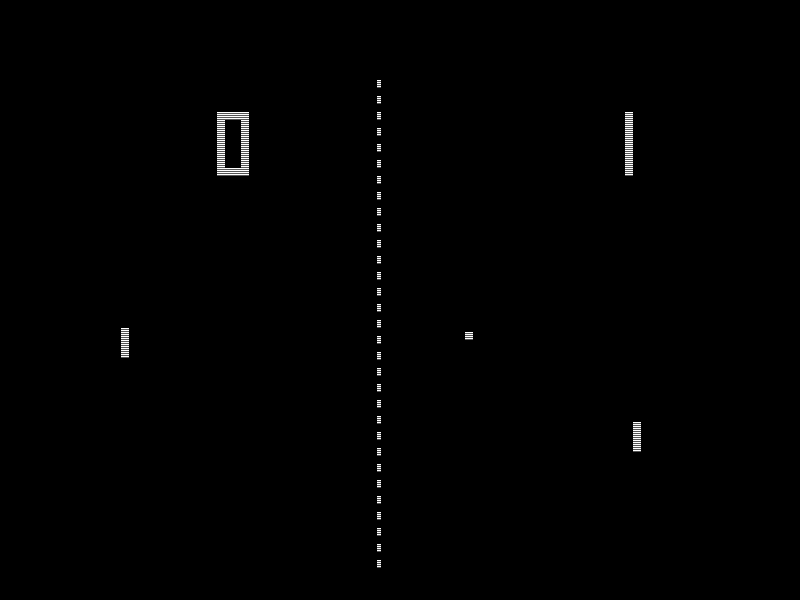
Videogames Are Their Own Medium
Videogames borrow from cinema, music, literature, theatre, visual art. But they are not reducible to any of these. What makes videogames distinct is that the player acts.
A film asks you to watch. A book asks you to read. A videogame asks you to do.
This doing can be pressing buttons, making choices, moving through a space, or even choosing to be still. But the player is always implicated in what happens. The videogame cannot exist without having a direct context to the player.
Not Just Product, Not Just Art
Videogames are often framed as products (entertainment, consumer goods) or as art (expressive works, cultural artifacts). Both framings capture something true.
But videogames are neither just products nor just art. They are both and neither. The creations that take full advantage of the medium understand this. They don't pick one framing and ignore the other. They embrace the full complexity of what videogames can be.
What We Study
In VG101, we study videogames as they are. We analyze the Gesture, the surface area of contact between player and videogame. We trace Aesthetic Heritage, where design choices come from. We examine Permissions, what the system allows and forbids.
We do this not to reduce videogames to formulas, but to develop vocabulary for what we experience. The goal is to play with more awareness, analyze with more precision, and create with more intention. Just as the atomic unit of a book is a chapter, or of a word a letter, so too does a videogame contain an atomic parcel of explicit, concrete, uninspired and deterministic.
Exercise: Medium Comparison
Pick a videogame you've played recently. Ask:
- What does this videogame ask me to DO that a film couldn't?
- What experience emerges from my doing, not just my watching?
- How would this be fundamentally different if I weren't playing?
Why Start Here
Students arrive with assumptions about what videogames are - often from marketing, reviews, or casual conversation. This page establishes the foundation: videogames are a medium of action, distinct from other media.
The product-vs-art framing helps students see that both perspectives have value, and neither is complete. This prevents the "videogames are just entertainment" dismissal AND the "videogames are high art" overclaim.
Common Misconceptions
"Videogames are interactive movies":
This privileges the cinematic elements over the action. Even story-heavy videogames like visual novels require the player to act (advance text, make choices). The action is the medium, not an add-on.
"The story is what matters":
Story can matter deeply. But the story is delivered through action - the player's and the videogame's. A videogame's story is inseparable from its Gestures.
Medium Specificity
The argument that videogames are their own medium draws on medium specificity - the idea that each medium has properties unique to it, and the best works in that medium leverage those properties.
For videogames, the unique property is player action. Not interactivity as an abstract concept, but the concrete reality that the player does things, and those doings constitute the experience.
Unresolved Questions
- Where do idle videogames, walking simulators, and other minimal-action videogames fit? Are they edge cases or do they reveal something about action we're missing?
- Is "action" the right word? Or does it privilege physical doing over cognitive/emotional engagement?
Related
- Gesture - the surface area of contact
- Player Psychology - how players think and respond
- The Design Lens - our framework for seeing videogames