Spatial Communication
Spatial communication is how level design talks to the player - guiding attention, suggesting paths, establishing importance, all without words.
Space isn't neutral. Every room, corridor, vista, and dead end is saying something. The question is whether it's saying what you intended.
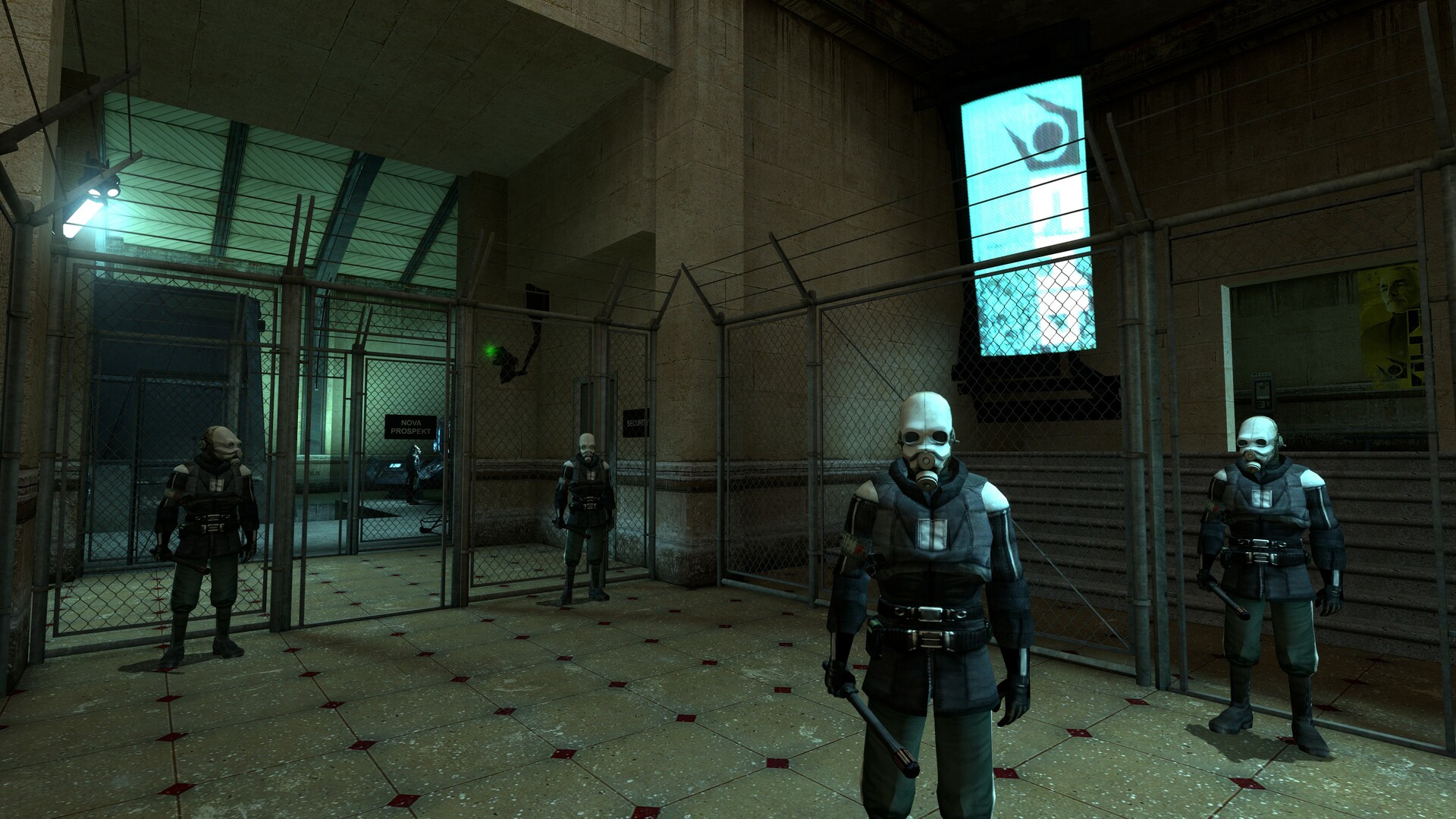
Space as Language
Level design is communication design. You're trying to tell the player:
- Where they are
- Where they can go
- Where they should go
- What matters
- What's dangerous
- What's safe
You do this through the arrangement of space and the objects within it.
The Vocabulary of Space
Framing
What you put in the player's line of sight. A doorway frames what's beyond. A window frames a destination. A narrow passage focuses attention.
Contrast
Difference draws the eye. A red door in a gray room. A lit area in darkness. An open space after tight corridors.
Scale
Size indicates importance. A huge door suggests something significant behind it. A tiny crawlspace suggests secret.
Repetition
Patterns establish expectations. Repeated columns create rhythm. Breaking the pattern draws attention.
Landmarks
Distinctive, memorable elements that help orientation. The Citadel in Half-Life 2. The volcano in Breath of the Wild.
Lines
Leading lines - paths, edges, beams of light - direct the eye. Railway tracks, rivers, rows of pillars.
The Critical Path
The critical path is the route through the videogame. Spatial communication should make it findable without making it compulsory.
Techniques:
- Light the critical path more brightly
- Make it wider or more inviting
- Place it in the player's natural eye line
- Use enemies or pickups as breadcrumbs
Danger: If the critical path is too obvious, the world feels like a corridor. If it's too hidden, players get lost.
The art is making the critical path feel discovered rather than prescribed.
Negative Space
What you don't put in a space matters.
- Empty rooms feel ominous or contemplative
- Missing objects (gaps in a lineup, empty pedestals) suggest something was taken
- Blocked paths show where you can't go, defining where you can
Teaching Through Space
The best tutorials are levels that teach without text.
World 1-1 of Super Mario Bros. teaches:
- Run right (empty left, enemies from right)
- Hit blocks (first block has a mushroom)
- Avoid enemies (Goomba in your path)
- Jump (first pit requires it)
No text. Just spatial arrangement.
Principle: Put players in situations where the correct action is the natural action.
Orientation Systems
Players need to know where they are. Spatial communication supports this through:
| Technique | How it works |
|---|---|
| Distinct zones | Each area looks different (ice level, fire level) |
| Visible landmarks | You can always see the mountain |
| Sightlines | You can see where you came from, where you're going |
| Logical geography | The world makes spatial sense |
| Environmental cues | Moss grows on north sides, water flows downhill |
Disorientation is sometimes the goal (horror, maze puzzles). But it should be chosen, not accidental.
See Also
- The 4 A's - Art component includes spatial composition
- Guidance Without Hand-Holding - adjacent concept
- Environmental Storytelling - space as narrative
Glossary Connections
- Critical Path - the main route through a level
- Weenie - Disney term for a visible landmark that draws you forward
- Leading Lines - visual elements that direct the eye
Teaching Notes
Spatial Communication is the bridge between Level Design and Feedback & Readability. Space is a feedback system.
Exercise: Screenshot Analysis
Students screenshot 5 moments where they knew where to go without being told. Analyze: what spatial cues did the designer use?
Then screenshot 5 moments where they were lost. What cues were missing or misleading?
Exercise: Paper Prototype
Design a level on paper (top-down). Identify the critical path. Then mark every spatial cue that will guide the player along it. Have someone else trace what they think the path is.
Where they diverge = communication failure.
Key Insight
Players don't read your intentions. They read your spaces.
Common Misconceptions
- "Good design means players never get lost." Sometimes disorientation is the goal. Horror, maze puzzles, and exploration videogames use confusion intentionally.
- "More landmarks = better navigation." Too many landmarks compete for attention and become noise. The right number is fewer than you think.
- "The critical path should be obvious." Too obvious feels like a corridor. The goal is discoverable, not obvious.
Assessment Approaches
- Blind playtest: Watch someone navigate a level with no instruction. Where do they go? Where do they hesitate?
- Heat mapping: Track player paths through spaces. Do they match intended flow?
- Eye tracking: What do players look at? Does it match what you're trying to communicate?
Theoretical Background
Christopher Alexander - A Pattern Language
Architecture as communication. Rooms shape behavior. Videogames inherited heavily from Alexander's work on how spatial patterns affect human experience.
Rudolf Arnheim - Art and Visual Perception
How humans parse visual space. The principles of visual weight, balance, and tension apply directly to level design.
Valve's Developer Commentaries
The Half-Life and Portal teams are masters of spatial communication. Their GDC talks and in-game commentary explain their techniques in detail.
What This Framework Takes
Level design is visual communication design. You're designing how eyes move, how attention is directed, how space is read.
Unresolved Questions
- Camera perspective: How do different camera perspectives change spatial communication? First-person, third-person, top-down each have different vocabularies.
- Cultural variation: Do players from different visual cultures read space differently? Does architectural tradition affect how players navigate?
- Accessibility: How do players with visual impairments navigate spatial communication? What alternatives exist to visual cues?
References
- Alexander, Christopher. A Pattern Language (1977)
- Arnheim, Rudolf. Art and Visual Perception (1974)
- Totten, Christopher. An Architectural Approach to Level Design (2014)
- Valve Developer Commentary (Half-Life 2, Portal series)