Pacing & Flow
Pacing is the rhythm of intensity over time - when the videogame pushes, when it relaxes, how those alternate.
Good pacing isn't constant intensity. It's contrast. The quiet moment makes the loud one louder. The rest makes the exertion meaningful.
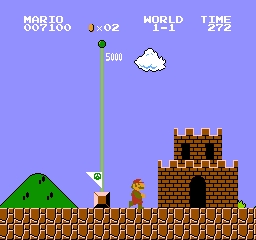
The Intensity Curve
Every videogame session has an intensity curve - how engaged/stressed/active the player is over time.
Intensity
   |
   |    ,-,     ,--,    ,----,
   |   /   \   /    \  /      \
   |  /     \-/      \/        \--- <- Finale/Resolution
   | /
   |/ <- Opening hook
   +-------------------------------- Time
The pattern: hook, build, release, build higher, release, climax, resolution.
Components of Pacing
Tension
What creates stakes, pressure, uncertainty.
- Combat
- Time pressure
- Resource scarcity
- Unknown threat
- Decision weight
Release
What relieves tension, allows recovery.
- Safe zones
- Story beats
- Rewards
- Humor
- Beauty
Rhythm
The alternation pattern. Fast-slow-fast. Push-rest-push.
Burnout Paradise understood this: the intensity of racing followed by free cruising creates satisfying oscillation. Tetris has natural rhythm in its escalation and momentary relief when clearing lines. Even a musical solo follows this pattern - tension builds, then resolves.
Macro vs. Micro Pacing
| Scale | What it affects | Example |
|---|---|---|
| Macro | Hours, entire videogame | Act structure, chapter pacing |
| Meso | Minutes to hour | Level pacing, mission structure |
| Micro | Seconds to minutes | Combat encounters, puzzle flow |
Good pacing exists at all three scales. A well-paced combat encounter in a poorly-paced level still feels wrong.
Pacing Tools
Gates
Points where the player can't proceed until something is done. Bosses, puzzles, story triggers. Gates punctuate.
Escalation
Gradually increasing intensity. More enemies, faster pace, harder challenges. Creates the build.
Respite
Deliberate low-intensity moments. Walking sections, safe rooms, campfire scenes. Creates the release.
Climax
Maximum intensity. Everything converges. The boss fight, the final chase, the revelation.
Denouement
Post-climax cool-down. The credits walk, the epilogue. Prevents emotional whiplash.
Player-Controlled vs. Designer-Controlled Pacing
Some videogames give pacing to the player:
- Open-world videogames (you decide when to do the main quest)
- Sandbox videogames (no imposed rhythm)
- Roguelikes (player sets their own pace through runs)
Some videogames control pacing tightly:
- Linear action videogames (this fight, then this cutscene, then this exploration)
- Horror videogames (tension carefully managed)
- Narrative videogames (story beats are sequenced)
Neither is superior. But know which you're doing.
Pacing Killers
Grind: Repetitive, low-meaning activity that pads time without building intensity.
Cutscene overload: Too much non-interactive time breaks the player's agency rhythm.
Difficulty spikes: Sudden, unexpected intensity without buildup.
Backtracking: Returning through low-content areas deflates momentum.
Information dumps: Pausing action for lore breaks the flow.
These aren't always bad - but they disrupt pacing. Use deliberately.
Flow State and Pacing
Flow (Csikszentmihalyi) is the state of complete absorption. Pacing supports or disrupts flow.
- Too much tension without release: Player can't reach flow (too anxious)
- Too little tension: Player can't reach flow (too bored)
- Poor rhythm: Flow keeps breaking (interrupted)
The goal isn't constant flow - it's appropriate oscillation between flow, tension, and rest.
See Also
- Player Psychology - flow state and engagement
- The 4 A's - Arc as the time component of pacing
- Spatial Communication - spatial pacing (corridor vs. arena)
Glossary Connections
- Flow - optimal engagement state
- Intensity Curve - pacing over time
- Beat - single pacing unit
Teaching Notes
Pacing is best understood through comparison. Have students map intensity curves for different videogames and see the different shapes.
Exercise: Intensity Mapping
Play a videogame for 30 minutes. Every 2 minutes, rate your intensity (1-10). Plot the graph. Where are peaks? Valleys? What caused them?
Compare graphs across different videogames and genres.
Exercise: Pacing Autopsy
Identify a moment where pacing felt wrong - dragging, rushed, jarring. Diagnose:
- What was the intensity just before?
- What was the intensity during?
- What transition was missing?
Key Insight
Pacing isn't about constant excitement. It's about purposeful contrast.
Common Misconceptions
- "More action = better pacing." Constant action becomes monotonous. The release makes the tension matter.
- "Slow sections are boring." Slow sections are necessary. Without valleys, peaks aren't peaks.
- "Pacing is just for linear videogames." Open-world videogames have pacing too - it's just emergent rather than authored.
Assessment Approaches
- Intensity graph: Have students create intensity graphs for their own levels or videogames.
- Playtest observation: Watch where players seem engaged vs. disengaged. Does it match intended pacing?
- Comparative analysis: Compare pacing across different videogames in the same genre.
Theoretical Background
Three-Act Structure
Screenwriting's tension model. Setup, confrontation, resolution. Videogames inherit and adapt this structure, though the interactive nature creates different possibilities.
Music Theory
Dynamics (loud/soft), tempo (fast/slow), phrasing. Videogames are temporal experiences; musical concepts apply directly to understanding pacing.
Csikszentmihalyi - Flow
Flow theory describes the optimal experience that pacing should support. The balance between challenge and skill creates engagement.
What This Framework Takes
The centrality of contrast. Intensity without relief is exhausting, not exciting. Rest without tension is boring, not peaceful.
Unresolved Questions
- Open-world pacing: How do open-world videogames pace when players control sequence? Is emergent pacing as satisfying as authored pacing?
- Natural rhythms: Is there a "natural" human rhythm that videogames should match? Circadian? Breathing? Heartbeat?
- Accessibility: Different players have different fatigue thresholds. How do we pace inclusively? Should difficulty options affect pacing, not just challenge?
References
- Csikszentmihalyi, Mihaly. Flow: The Psychology of Optimal Experience (1990)
- Field, Syd. Screenplay: The Foundations of Screenwriting (1979)
- Schell, Jesse. The Art of Game Design (2008) - Chapter on Flow
- Swink, Steve. Game Feel (2009) - Chapter on Pacing