Undertale: Genocide Route
Undertale's Genocide Route is what happens when a videogame says "you can do this" and means it as a warning, not an invitation. It's a case study in Permissions that carry weight - where what's allowed becomes deeply uncomfortable.
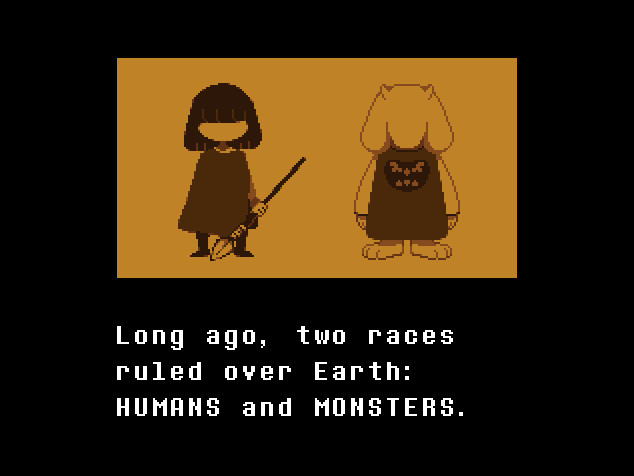
The Three Routes
Undertale has three primary paths:
| Route | How to Trigger | Tone |
|---|---|---|
| Neutral | Default - kill some, spare some | Bittersweet |
| Pacifist | Kill nobody, befriend everyone | Hopeful, earned happiness |
| Genocide | Kill everything. Hunt until areas are empty. | Horror, emptiness |
What Genocide Requires
The Genocide Route isn't just "kill everyone you meet." It requires:
- Active hunting: You must seek out every enemy in every area
- Grinding: Random encounters don't stop until you've killed everyone
- Persistence: The videogame tells you how many are left ("But nobody came.")
- No exceptions: Sparing anyone ends the route
This is tedious by design. You can't stumble into Genocide. You have to want it.
What Changes
On the Genocide Route:
- Music becomes slower, darker, eventually silent
- NPCs flee or hide from you
- Save points change text ("Determination." becomes numbers)
- Boss fights are replaced with one-sided slaughters - or nightmare difficulty
- The final boss is one of the hardest fights in any videogame
- Dialogue reflects what you've become
The Permanent Consequence
Completing Genocide permanently alters your save data. Even after a full reset, the game "remembers." Future Pacifist endings are tainted. The videogame sold your soul - and the transaction persists outside any in-game reset.
This consequence extends to your actual computer's save files, not just in-game state.
The 4 A's Perspective
- Action: Combat becomes mandatory grinding. The Gesture shifts from choice-based encounters to repetitive elimination.
- Art: Visual and audio design degrades. Music slows. Colors drain. The videogame becomes hostile to look at.
- Arc: Much longer than other routes due to required grinding. Intentionally tedious.
- Atmosphere: Horror. Not jump-scare horror - existential horror. You're the monster.
Try This
Watch, don't play
The Genocide Route is designed to be unpleasant to complete. Consider watching a playthrough first. Notice how the videogame makes you work for every kill.
Compare the fights
Watch the Papyrus fight on Neutral/Pacifist vs. Genocide. Same character, same location. Radically different experience.
Why Use This Case Study
The Genocide Route is the clearest example of Permissions as moral architecture. Most videogames that let you be evil either:
- Reward it (power fantasy, more loot)
- Ignore it (NPCs respawn, no consequences)
- Prevent it (invincible children, locked-out options)
Undertale does something different: it allows evil, but makes you earn it through labor, and makes the consequences permanent. This is permissions design at its most deliberate.
Teaching Sequence
- Have students play Undertale blind (most will get Neutral)
- Discuss the Mercy mechanic and what it represents
- Introduce the existence of the Genocide Route - without spoiling details
- Watch key Genocide moments together (boss fights, ending)
- Discuss: Why did Toby Fox include this? What does allowing it say?
Discussion Prompts
- Why is Genocide tedious? Is that a design flaw or intentional?
- What's the difference between forbidding evil actions and allowing them with consequences?
- How does the permanent save alteration change the stakes?
- Can a videogame judge the player? Should it?
- What does it mean that most players who start Genocide don't finish it?
The Labor of Evil
Genocide requires grinding - walking around empty areas waiting for encounters that become less frequent. This is intentional friction:
- You can't kill casually - you must commit
- The videogame gives you time to reconsider
- Boredom becomes part of the horror
- The effort involved makes completion a choice, not an accident
This is the opposite of how most videogames handle player agency. Usually, evil is easy. Here, evil is work.
Common Misconceptions
"The Genocide Route is the 'true' or 'complete' experience"
It's one of three routes. Many players (and the creator) consider Pacifist the intended "good" ending. Genocide exists to make a point, not to be played by everyone.
"You have to play Genocide to understand Undertale"
You don't. The route exists for those who choose it. Watching is valid. Not engaging is valid. The videogame respects that choice.
Permissions as Moral Framework
From a Permissions perspective, the Genocide Route reveals that what a videogame allows carries meaning:
- Allowed: Killing everything. The videogame doesn't stop you.
- Required: Active hunting. Passive killing won't trigger the route.
- Forbidden: Mercy. Any mercy ends Genocide.
The permission to commit genocide exists specifically so the videogame can respond to it. By allowing it, the videogame can judge it.
Complicity and Player Agency
Undertale makes the player complicit:
- You weren't forced - you chose
- You weren't tricked - the videogame warned you
- You weren't efficient - you worked for this
This complicity is what makes the permanent consequences feel earned rather than arbitrary. The videogame didn't punish you - you punished yourself.
The Fourth Wall Break
Genocide breaks the fourth wall by:
- Acknowledging your save/load behavior
- Persisting consequences in actual files
- Addressing "you" directly, not the character
- Making the final boss explicitly aware of meta-game behavior
This transforms Genocide from "playing a villain" to "being judged for playing." The locus of moral evaluation shifts from character to player.
Aesthetic Heritage: RPG Violence
The Genocide Route critiques RPG conventions:
- Grinding is standard in JRPGs - here it's horrifying
- Killing for XP is normal - here it's examined
- Power growth is rewarding - here it's corrupting
- The "kill everything" player is a common archetype - here, that's the villain
Undertale transforms its Aesthetic Heritage from celebration to critique. It uses familiar mechanics to ask: why do we do this?
The Sans Fight
Sans, the final Genocide boss, is one of the hardest fights in any videogame. This serves multiple purposes:
- Mechanical punishment: You wanted power? Earn it.
- Narrative coherence: Someone finally stops you
- Player psychology: Most Genocide runs end here
- Meaning: The videogame is literally fighting back
The difficulty isn't arbitrary - it's the videogame's last attempt to stop you.
Unresolved Questions
- Is the permanent save alteration a violation of player trust, or the ultimate consequence?
- Can a videogame ethically judge players for engaging with content it provides?
- Does watching Genocide (via YouTube) carry the same moral weight as playing it?
- What does it mean that Genocide is the most-discussed route despite being least-played?
Related
- Permissions - the framework this case study exemplifies
- Dark Souls: Bonfire - another videogame where difficulty carries meaning
- Player Psychology - motivation and moral reasoning